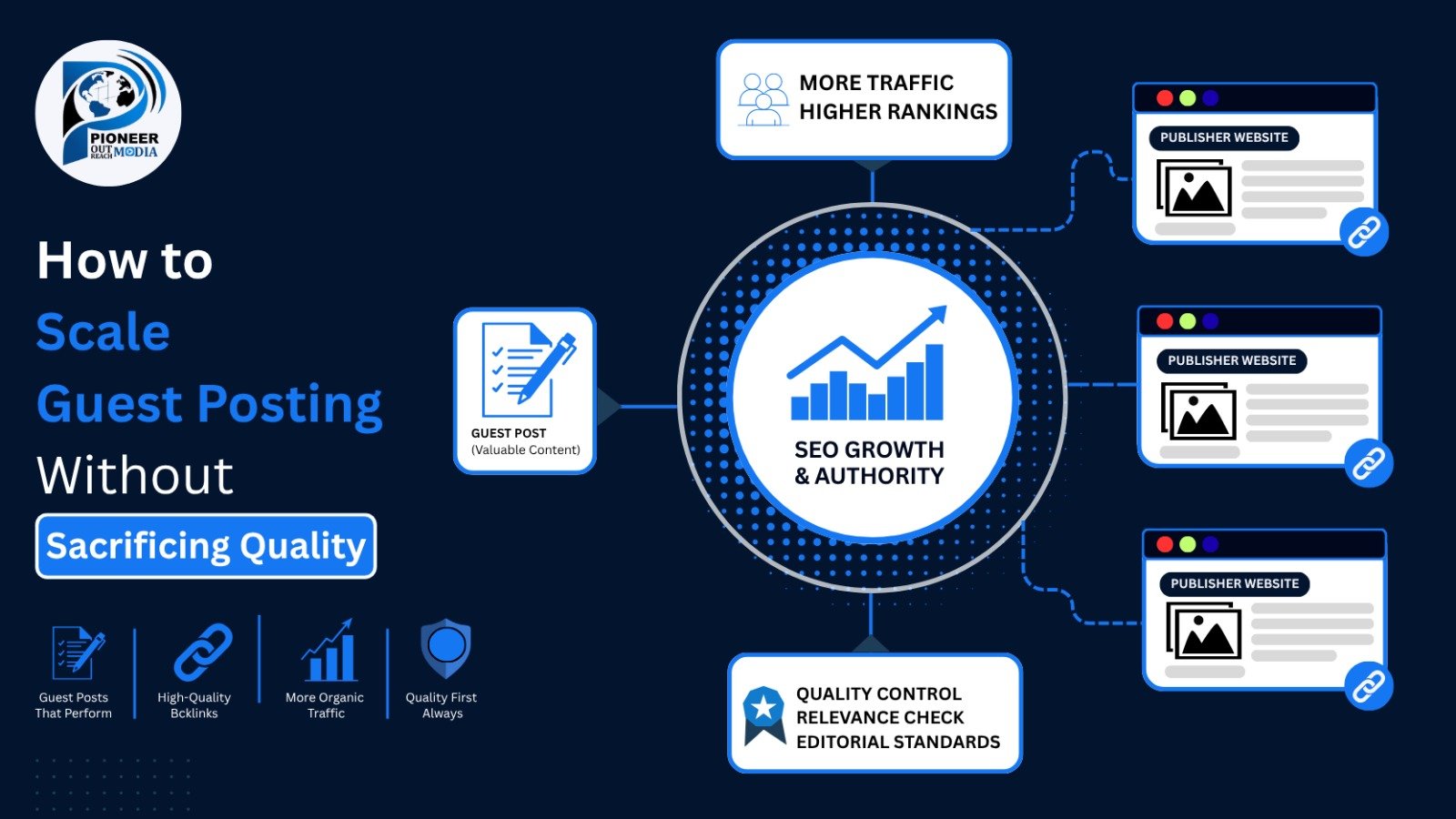

Guest posting is a powerful way to build backlinks, increase brand visibility, and reach a wider audience. As your SEO strategy grows, you may want to publish more guest posts on different websites. However, scaling guest posting is not just about increasing the number of articles. Many businesses spend their budget on a large number of low-quality links, while investing the same budget in fewer, high-quality guest posts can often provide more value. The real challenge is to grow your guest posting campaign while maintaining quality and relevance. With the right process, you can scale guest posting effectively without compromising the value of your content or backlinks.
Why Quality Matters When Scaling Guest Posting
When you scale guest posting, it can be tempting to focus only on publishing more articles and building more backlinks. However, quality matters just as much as quantity. Publishing on the wrong websites can waste your budget and provide little SEO value.
Relevant websites: should always be a priority. A backlink from a website related to your industry is more valuable because it is relevant to your content and target audience. You should also consider website authority before choosing a publisher. A trusted website with an established presence can provide more value than a low-quality site created mainly for backlinks.
Real organic traffic: is another important factor. Websites with genuine visitors can help your brand reach the right audience, not just search engines. High-quality placements can also help you build stronger backlinks and support your SEO efforts over time.
Finally, quality guest posts can protect your brand reputation. Publishing useful content on trustworthy websites makes your business look more credible and professional.
Build a High-Quality Publisher Network
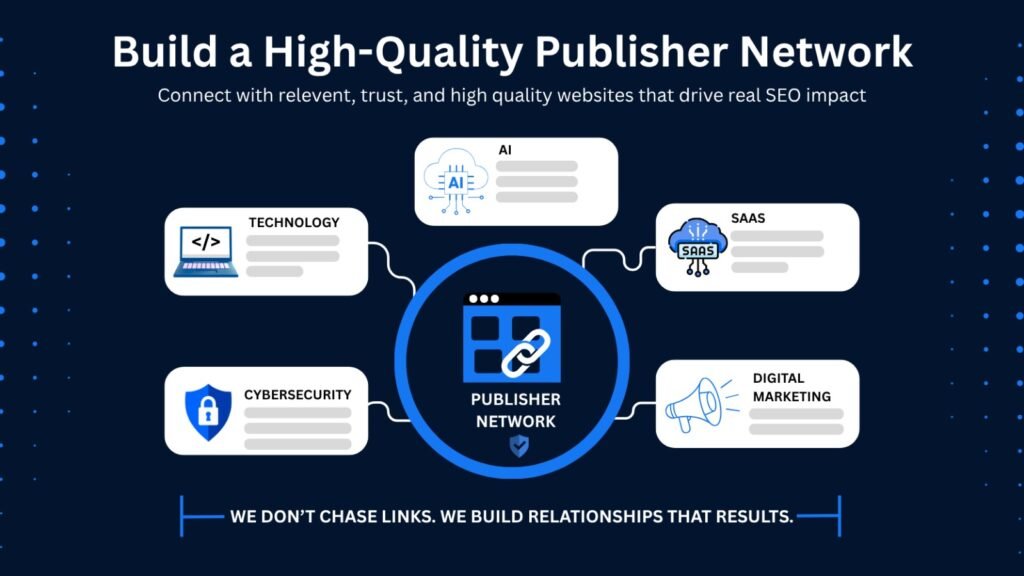
If you want to scale guest posting, do not depend on random websites. Instead, build a list of trusted websites that are relevant to your niche. This will make your guest posting process easier, faster, and more effective.
Start by finding websites that publish content related to your industry. For example, if you work in technology, look for websites covering software, SaaS, AI, cybersecurity, or digital marketing. Relevant websites are more likely to help you reach the right audience.
Before adding a website to your list, check its quality. Look at its organic traffic, website authority, content quality, and publishing activity. Also, make sure the website is active and has genuine visitors. Avoid sites that publish hundreds of unrelated articles mainly to sell backlinks.
Keep your publisher information in one simple spreadsheet. You can include the website name, niche, traffic, price, link type, contact details, and publishing time.
As your network grows, focus on building good relationships with publishers. A list of 50 trusted websites can be more valuable than 500 random sites. This approach helps you scale guest posting while maintaining the quality of your content and backlinks.
Create a Repeatable Content Process
When you publish more guest posts, a clear content process can save time and help maintain quality. Start with topic research and choose topics that are useful for the target audience and relevant to the publisher’s website.
Create simple content guidelines for word count, writing style, headings, and links. This helps writers understand the requirements before starting.
Before publishing, every article should go through basic quality checks for grammar, facts, links, formatting, and readability. A final editing step can also improve the overall quality.
Most importantly, make sure every guest post contains original and useful content. A simple, repeatable process allows you to publish more articles without letting quality drop.
Use Outreach Systems to Save Time
As your guest posting campaign grows, manually managing emails, replies, and follow-ups can take a lot of time. A simple outreach system can help you manage more publishers efficiently.
Start with a few email templates for initial outreach, follow-ups, and price discussions. Keep them short and personalize each email before sending.
Use a tracking sheet or CRM to record websites, contact details, responses, prices, and outreach status. This makes it easier to manage follow-ups and avoid missing opportunities.
For example, at Pioneer Outreach Media, keeping publisher information organized helps manage outreach and guest posting campaigns more efficiently. Having a structured process makes it easier to communicate with publishers, track opportunities, and maintain consistent quality as the network grows.
Follow-ups are also important because publishers may miss your first email. Send polite reminders after a few days instead of contacting them repeatedly.
A well-organized outreach process saves time and makes it easier to scale guest posting without losing control of quality.
Focus on Relevance Over Quantity
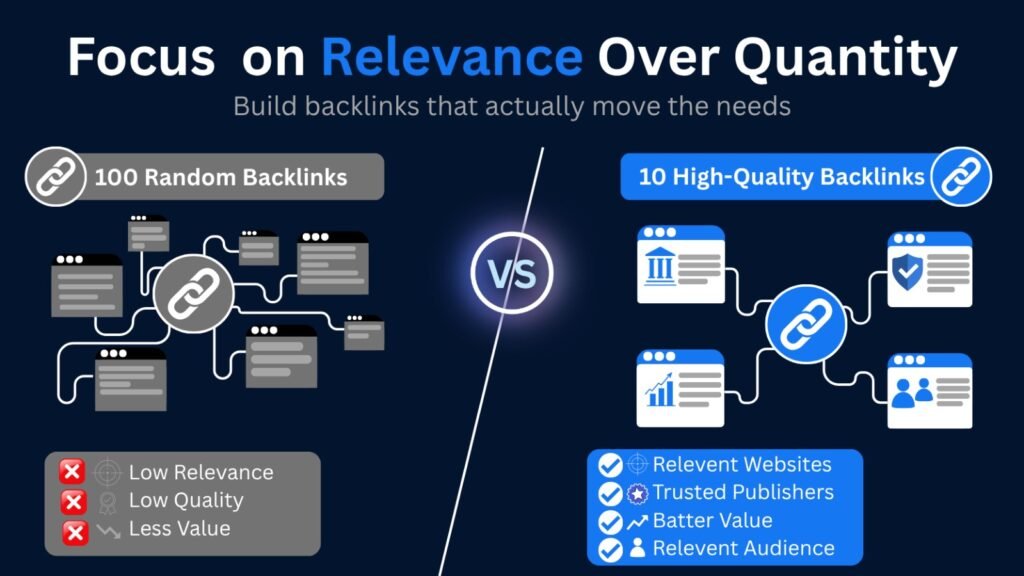
When building backlinks through guest posting, more is not always better. Getting 100 backlinks from random or unrelated websites may look impressive, but they may provide little value. A few backlinks from relevant and trusted websites can often be much more useful.
For example, if your business is related to software, a backlink from a technology or SaaS website makes more sense than one from an unrelated website. The content, audience, and industry are connected, making the placement more natural.
Relevant websites can also help you reach people who are genuinely interested in your products or services. This means a quality guest post can provide both SEO value and referral traffic.
Instead of focusing only on the number of backlinks, consider the website’s relevance, audience, traffic, and reputation. In guest posting, quality and relevance should always come before quantity.
Track the Right Metrics
When scaling guest posting, do not judge a website only by its DR or DA. These metrics can be useful, but they do not tell the full story. Look at several factors before choosing a publisher.
Start with organic traffic and ranking keywords to see whether the website is actually receiving search traffic. Relevance is also important, so make sure the website and its audience match your industry.
You should also check the link placement. A naturally placed backlink within useful content is generally more valuable than a link placed in an unrelated section.
After publishing, monitor referral traffic to see if readers are clicking your link. Finally, check whether the guest post is indexed by search engines.
Tracking these metrics together helps you choose better publishers and build a stronger guest posting strategy.
Common Mistakes to Avoid
Scaling guest posting can bring good results, but certain mistakes can reduce its value.
One common mistake is choosing cheap websites only because they offer low prices. A cheap placement is not useful if the website has little traffic, poor content, or a weak reputation.
Avoid publishing on irrelevant websites just to get another backlink. The website should have some connection with your industry and target audience.
Do not use duplicate or heavily rewritten content. Every guest post should be original and provide value to the readers.
It is also important to avoid websites with excessive outbound links, as they may focus more on selling links than providing useful content.
Finally, never sacrifice content quality just to publish more articles. Poor research, grammar mistakes, and content written only for backlinks can hurt your brand and reduce the value of your campaign.
Conclusion
Scaling guest posting does not mean publishing as many articles as possible. The goal is to build a process that allows you to publish more content while maintaining quality. Focus on trusted and relevant publishers, create a simple content process, organize your outreach, and track the metrics that matter.
Avoid cheap websites, irrelevant placements, duplicate content, and low-quality articles just to increase your backlink numbers.
The key takeaway is simple: scale the process, not the standards. When quality remains a priority, guest posting can become a consistent part of your SEO strategy and help you build stronger backlinks, better visibility, and long-term trust.